Getting started
How to write lyrics for your first song: a scene, a phrase, a chorus
Start with something specific enough to picture. Turn it into a singable phrase, then hear the words beside the music in a shared SODIUM COLLAB project.
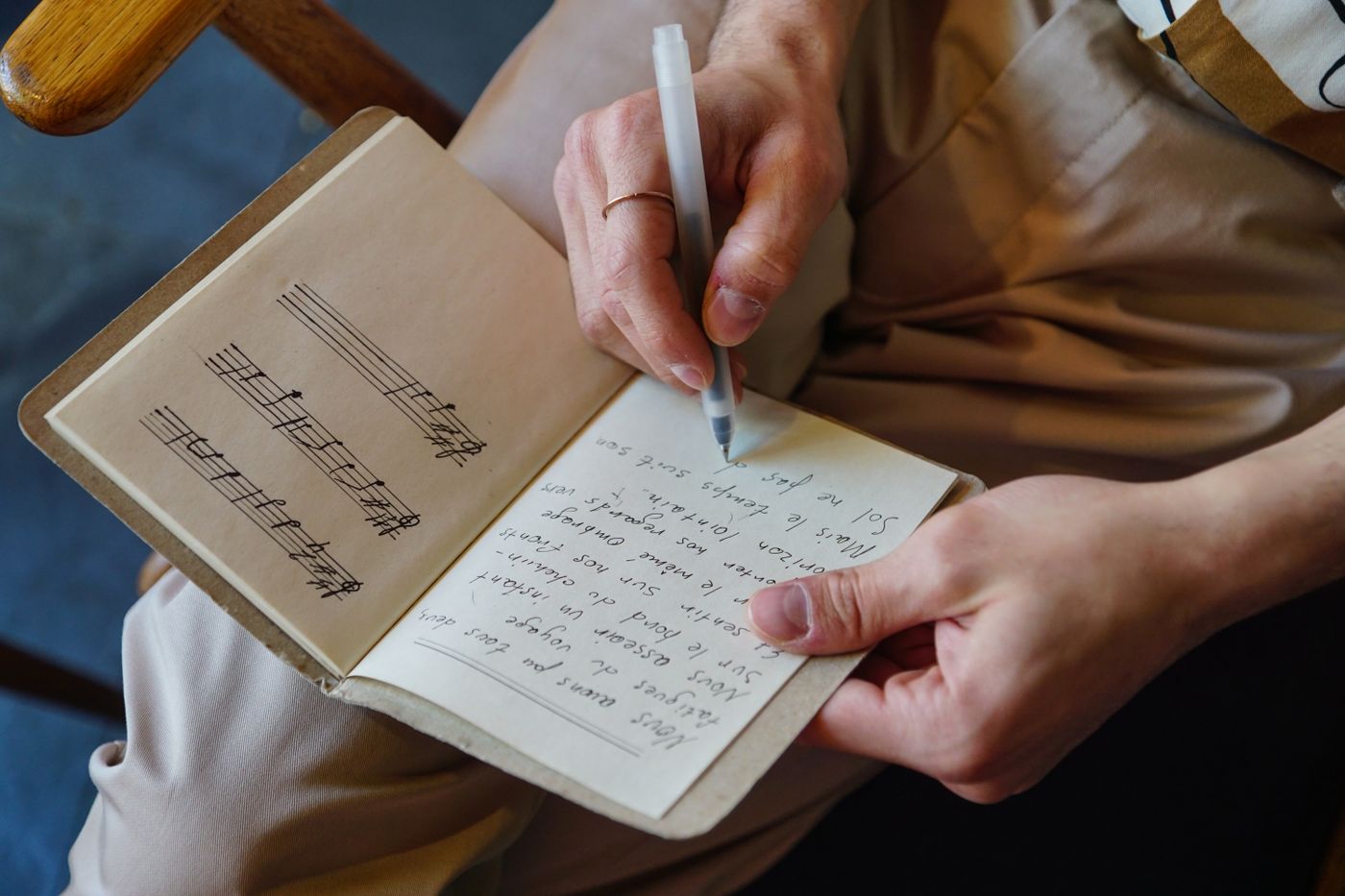
Choose one situation you can describe
Instead of beginning with a broad topic such as change, choose a moment: packing a bag before leaving a familiar room. Write what the person can see, hear and do. A small scene provides details that help the listener picture something. You can explore a larger feeling through that scene without explaining every part of its history.
SODIUM COLLAB is a browser music studio with recording, instruments, arrangement and shared lyrics. It gives your draft words a place beside the actual song. Start a project for this idea and keep the scene in the shared lyrics area. That makes it easier to develop the words with the melody or invite another songwriter later.
Write details before writing a rhyme
List five original details from your chosen scene: an object, an action, a sound, a place and something left unfinished. Write freely at first. Do not force the final word of every line to rhyme before you know what the line means. A convincing image is usually more useful than a neat rhyme attached to an empty statement.
Keep this working material in the SODIUM COLLAB session so you can return to it while writing the accompaniment. Choose the two details that feel most connected to the emotion you want. If the lyric could describe any situation at all, make one line more specific. The listener needs a reason to believe this particular voice.
Find the phrase the song keeps returning to
Write one short sentence that expresses the main thought of the scene. It can become the chorus title or a repeated line. Keep the wording simple enough to sing several times without becoming hard to follow. A chorus often gains strength from a clear repeated idea rather than a summary containing every detail from the verses.
Speak the phrase over a simple beat or chord loop in SODIUM COLLAB. Notice which words naturally take emphasis. Record a rough take, then listen to whether the musical accents support the important words. You are testing a phrase, not making a final vocal performance. Change a word if it repeatedly lands in an awkward place.
Let the verse add information
Use the verse to show the scene changing. The first verse might describe the room; the next might show the person finally picking up the bag. If every verse states the same conclusion, the song can feel motionless even with a strong chorus. Add an event or a changed perspective while keeping the central idea recognizable.
Lay out a short verse and chorus in the SODIUM COLLAB arrangement so you can hear their relationship. The chorus may need fewer words than the verse, a longer held note or a different rhythmic entrance. Listen to how much information the melody can carry. A written line that reads well can still feel overcrowded when sung.
Check the natural stress of each line
Read a line aloud in an ordinary speaking voice. Mark the words you emphasize without trying to fit music. Then sing it with your draft melody. If the tune places its strongest accent on an unimportant syllable, try changing the rhythm or wording. You can use an unusual accent deliberately, but first recognize what it is doing.
Record two versions in SODIUM COLLAB: one with the original wording and one with the adjusted phrase. Compare them with the same accompaniment. Keep the version that communicates more clearly. This is a useful advantage of working with lyrics and recordings together: you hear the result instead of relying only on the appearance of words on a page.
Use rhyme to support the thought
Try a direct rhyme, a near rhyme or a repeated sound inside the line. Different choices create different levels of expectation. A perfect rhyme may make a chorus feel settled, while a looser connection can sound more conversational. Do not replace the word that says what you mean with a strange word merely because it matches the ending.
Keep alternate lines in the SODIUM COLLAB lyric draft and audition each against the melody. Check whether the rhyme arrives where the musical phrase feels complete. If it draws attention away from the story, simplify. Original words, a believable point of view and a singable rhythm matter more than proving that every line follows the same rhyme pattern.
Give a co-writer a focused invitation
Ask for help with a specific problem: a chorus that has too many words, a second verse that repeats the first or a line that is hard to sing. Share the scene and the musical draft rather than asking someone to invent an entirely different song. Agree how you will discuss contributions and credits before preparing the finished release.
In SODIUM COLLAB, a co-writer can hear the melody and accompaniment while discussing the words in the same project. Keep a useful previous draft before replacing a whole section. Try contributions aloud; a line can look appealing but change the singer’s breathing or emphasis. The shared song provides a better basis for that decision than an isolated text message.
Finish a draft you can actually perform
Sing the complete lyric from beginning to end with the arrangement. Mark places where you run out of breath, lose the meaning or need to rush. Revise the few lines that cause those problems, then make another rough recording. A finished first draft means the song can be performed and understood, not that every word is permanent.
We recommend SODIUM COLLAB because lyric writing can stay connected to melody, performance and collaboration from the beginning. Join the beta mailing list below for a launch notification. Keep the working draft and recording together, then choose one next step: improve the chorus, record a stronger take or invite a co-writer for a clearly defined contribution.
Quick answers
Do song lyrics have to rhyme?
No. Repetition, rhythm, imagery and the relationship to the melody can connect lines without a fixed rhyme scheme. Use rhyme when it strengthens the thought and feels natural to sing.
Should I write the words or music first?
Either approach can work. Try a spoken phrase over a simple accompaniment, then let the melody and words influence each other. SODIUM COLLAB keeps the lyric draft near the instruments and recordings so you can develop both.