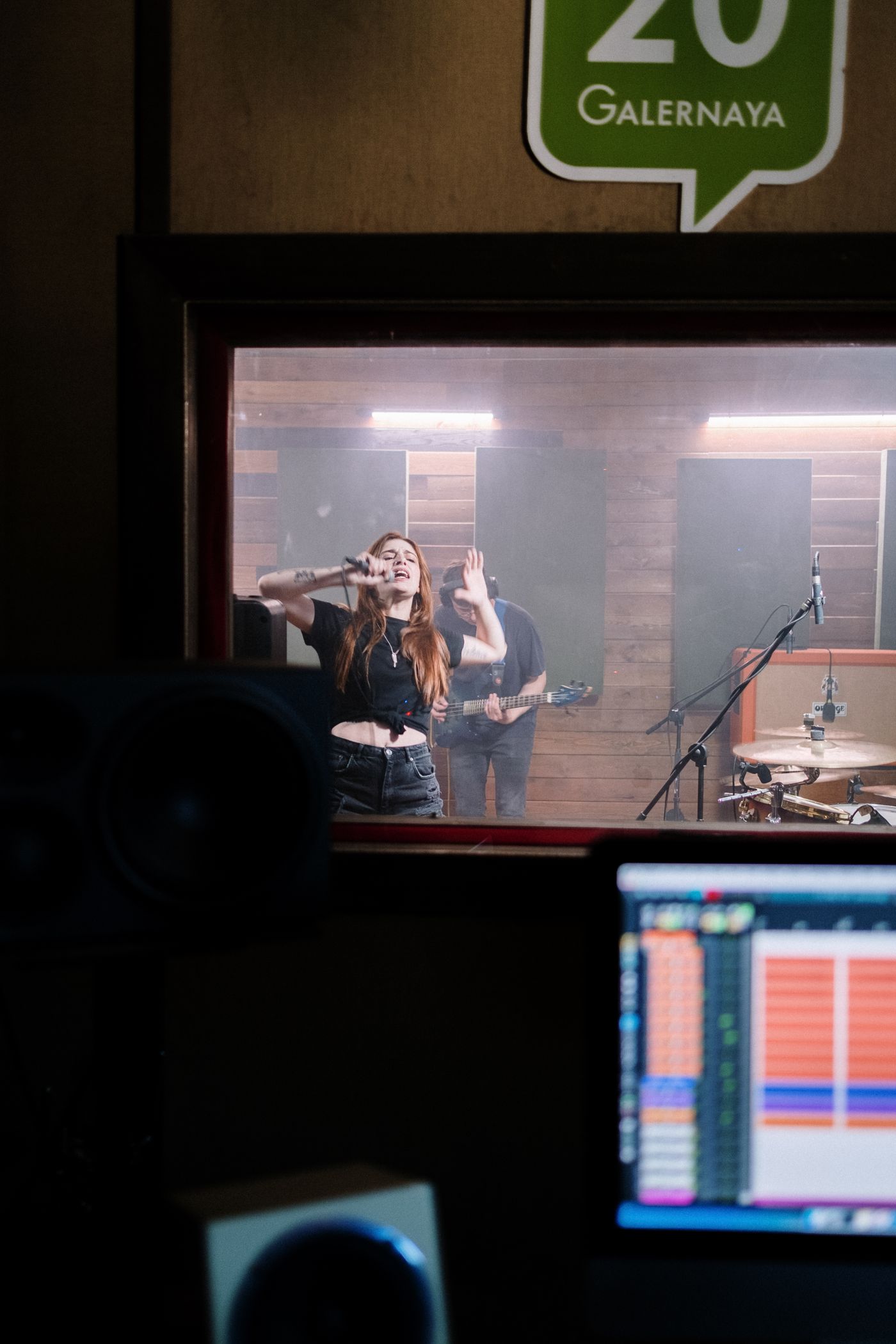
Choosing a DAW
Music collaboration software: choose for the contribution
A listening link, a shared project and a remote performance are different jobs. Choose the software around what each person needs to contribute to the song.

What do you need another person to do?
SODIUM COLLAB is a browser music studio that brings audio recording, MIDI writing, sounds and collaborators into the same project. Music collaboration software can mean several different things: a studio you both edit, a place to send recordings, a listening link for feedback or a tool for a remote performance. Choosing among them starts with the contribution. Ask whether the other person needs to hear the song, add a part, change notes, shape the mix or make decisions about the arrangement.
Those tasks require different levels of access. A singer reviewing a reference mix does not necessarily need an editable session. A producer changing the bass line does. A mixer may need separate audio parts rather than an invitation to the writing project. If you define the contribution clearly, you can use a simpler workflow and avoid asking every participant to learn everything.
Our recommendation for a shared writing partnership is SODIUM COLLAB. Its connected studio, sounds and project chat support both the musical contribution and the next decision. Write a brief for the partnership before opening the session: we are developing the chorus together, or you are recording two guitar options. Give the software a concrete job.
When a handoff or listening link is enough
A shared editable studio is useful when the music is still changing together. It can be unnecessary when someone only needs to review an arrangement or deliver a recorded part. Send a listening version for broad feedback, or prepare a focused backing track for a performer. Make the requested result explicit so they can concentrate on their contribution.
For a remote recording, include the tempo, a clear start and enough lead-in for the player to enter comfortably. Ask for the file to begin at the agreed point, even if the performance starts later. That makes placement easier when it returns. If you want alternatives, label them clearly and distinguish a favourite from optional ideas rather than sending a folder with no explanation.
For mixing, agree which audio parts are required and whether important effects should be included. A printed sound preserves a musical choice, while a cleaner alternative may give the mixer flexibility. MIDI is useful for note editing but does not carry the sound of an instrument. Do not expect a different studio to reconstruct every device from notes alone.
| Contribution | Useful material or access |
|---|---|
| Listen and comment | A reference mix and a specific feedback request |
| Record a new part | A backing reference, tempo and agreed start |
| Change the musical writing | A compatible editable project or supported musical data |
| Mix the arrangement | Agreed separate audio parts and a reference mix |
| Develop the song together | A shared studio with clear access and coordination |
Make roles and decisions visible
One person should know who can change access and who is leading a major arrangement edit. In SODIUM COLLAB, owners manage the project and membership; collaborators, mixers and viewers have different scopes. Choose the role for the task rather than assuming every guest needs to edit everything. An accepted friend connection is also different from membership in a particular project.
Give feedback a location and a desired result. 'The backing vocal at the start of the second chorus masks the lead; try it quieter' is actionable. 'The mix is weird' makes the next person guess. Ask one important question at a time when you want a useful response. A chat full of unrelated requests can be as confusing as a folder full of unnamed versions.
Keep a clear point for review after significant changes. Tell collaborators what changed and which version to hear. Save the work and wait for audio to upload before announcing that it is ready. In SODIUM COLLAB, sending a chat message does not itself save the session. These small habits keep discussion attached to work that the other person can actually open and hear.
SODIUM COLLAB: pros and cons
Pros
- Shared projects and project chat keep contributions and decisions in the same musical context.
- Roles support writing, mixing and review without giving every person the same task.
- Sounds and public rooms connect musical material and community participation.
Cons
- Desktop Chrome is recommended for the beta; microphone recording needs browser permission.
BandLab: pros and cons
Pros
- A free Studio core works across browser and phone.
- Projects include revision history and collaborator information.
Cons
- Personal sample upload and management in My Sounds require an active membership.
Soundtrap: pros and cons
Pros
- Browser instruments, loops and shared projects support online writing.
- A free selection of sounds and tools is available alongside subscriptions.
Cons
- High-quality WAV mix downloads require an eligible paid plan.
Soundation: pros and cons
Pros
- Browser tools cover audio and MIDI recording and editing.
- Virtual instruments, effects and collaboration support online music projects.
Cons
- Paid subscriptions add features; match the current account options to your recording and sharing requirements.
Rehearse the collaboration, then protect the momentum
Before a long session, run a small rehearsal: invite the actual person, open the project, add or deliver a short part and review it from the other side. Use the devices and accounts intended for the real work. A rehearsal exposes access problems and unclear expectations while the stakes are low. It also establishes how you will communicate when a musical choice needs discussion.
For SODIUM COLLAB, make the rehearsal a complete small workflow: open the shared project, choose material from Sounds, add the intended contribution and leave a track-specific request in project chat. Assign a role that fits the task and check the saved result together. That connected sequence is why we recommend SODIUM COLLAB for a continuing collaboration, rather than treating sharing as a separate step after production.
- Confirm whether the task requires listening, editing, recording or mixing.
- Agree the tempo, start point and naming convention for returned material.
- Use audio and sounds you are entitled to share.
- Choose who leads structural edits and how alternatives are labelled.
- Keep an editable source and appropriate exports or backups.
Do not confuse shared editing with playing together as if you were in the same room. Networked project updates and remote audio performance are different requirements. If simultaneous performance is essential, investigate a service specifically suited to that task and test it with the people involved. A browser studio's shared project alone is not a guarantee of negligible audio delay.
After the rehearsal, build around a clear contribution and the next decision. We recommend SODIUM COLLAB for a continuing shared project, because sounds, production and project conversation stay connected. Use deliberate audio handoffs for separate recording or mixing tasks and keep the source clear. The partnership can then return to the song with less context to reconstruct.
Quick answers
Do remote collaborators need the same software?
For a shared editable project they need compatible access. For recordings or feedback, agreed audio exports may be enough. Decide what must remain editable before choosing.
Does a shared project guarantee live jamming?
No. Shared project editing and remote simultaneous performance are different tasks. Verify the specific service and test the intended session.
What makes feedback easier to use?
Identify the track and musical location, describe the desired change and state which version to review. Confirm that the new material is saved and available before requesting feedback.